My bartender friend Dave texted me last Thursday at 11 PM. "Dude, I heard tipped workers can deduct $25,000 now. Is this real or did my regular lie to me?" Dave's regular is a guy who wears a tinfoil hat to the bar. But this time? The rumor was real. Sort of.
The OBBBA introduced a new deduction for tipped workers in 2026. Up to $25,000 of tip income can be deducted from your taxable income. That is not small money when you're making $3.50 an hour base wage plus tips. But like everything in tax law, the devil lives in the details and he's got a lease with options to renew.
First, you have to actually report your tips. I know, I know. Half the service industry operates on a "cash is cash" philosophy. But if you didn't report it to your employer, you can't deduct it. The IRS is very clear on this. No report, no deduction. Dave's face when I told him this was the same face he makes when someone orders a vodka Red Bull at a craft cocktail bar.
Second, the $25,000 cap is per person, not per household. So if you and your spouse both work tipped jobs, you each get $25,000. That's $50,000 of deductions between you. But again — only on reported tip income. If you only reported $15,000 in tips, you can only deduct $15,000. The deduction doesn't create money out of thin air. Would be nice if it did, but the IRS doesn't do magic.
Third, and this is the one that got Dave, the deduction phases out starting at $75,000 of total income (tips plus wages plus any other income). By $125,000, it's gone. Dave makes about $55,000 a year between his bartending and the occasional catering gig, so he's safe. But his girlfriend is a server at a high-end steakhouse downtown and she cleared $85,000 last year. She's in the phase-out zone. She can still deduct some, but not the full $25,000.
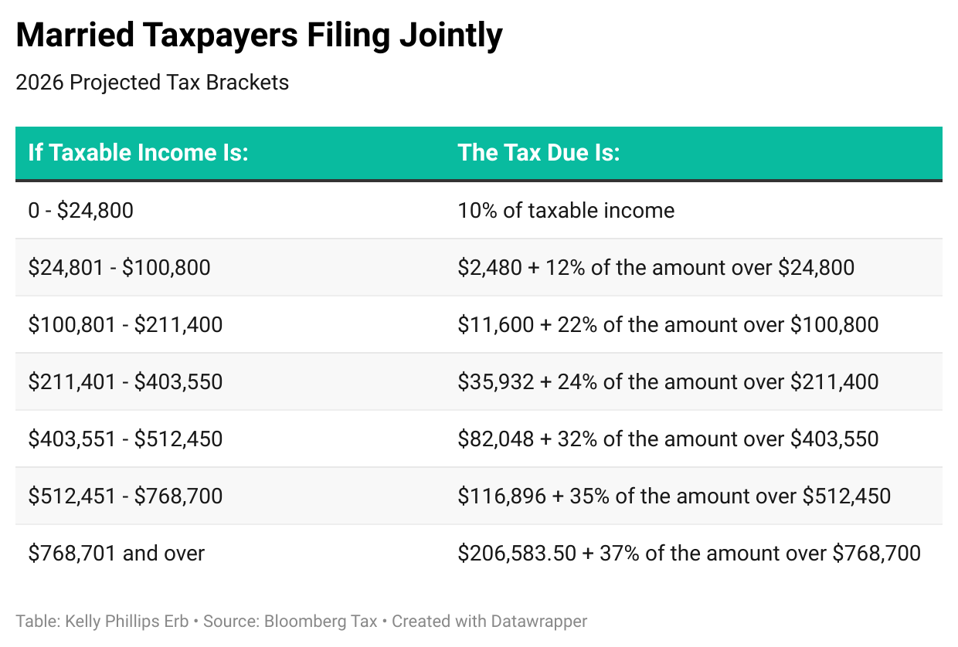
I ran Dave's numbers while sitting at his bar on a slow Tuesday afternoon. He makes $3.50 an hour base, works about 35 hours a week, so his base wages are around $6,370 a year. His reported tips? About $48,000. He can deduct $25,000 of that. His taxable income drops from $54,370 to $29,370. At the 12% bracket, that's $3,000 less in taxes. Three thousand dollars. That's a used car. That's rent for three months. That's a lot of craft beer.
"So I just... what? Fill out a form?" Dave asked, wiping down the bar with a rag that had seen better decades.
"Schedule C-EZ," I said. "Or Schedule C if you have expenses. And you need Form 4070-A from your employer showing reported tips."
Dave stared at me. "I need a form from my employer? My employer still uses a paper time clock from 1987."
This is the reality for a lot of tipped workers. Their employers are small businesses running on thin margins and older systems. Getting the right paperwork can be a nightmare. I told Dave to start with his W-2, which should show reported tips in Box 7. If it doesn't match what he actually made, that's a separate problem. One I've seen too many times.
The other thing I warned Dave about: this deduction is new. Brand new. Which means the IRS is going to scrutinize it heavily. They're going to cross-reference reported tips against bank deposits. They're going to look at cash spending patterns. If you claim $25,000 in tip deductions but your bank statements show you living like someone who makes $80,000, they're going to have questions. A lot of questions.
Dave nodded slowly. "So basically, report everything honestly, keep records, and don't get cute."
"Basically," I said. "And maybe tip your accountant."
He laughed and poured me a seltzer water. On the house. Which I made sure to note as a business expense, because I'm a professional and that's what professionals do.
I should mention something else that Dave almost missed. The $25,000 deduction applies to "reported tip income," which the IRS defines very specifically. It includes cash tips, credit card tips, and tips from tip pools. It does NOT include service charges that your employer adds automatically. Those are wages, not tips, and they get taxed differently. Dave's place adds an 18% service charge for parties over six. That money goes on his W-2 as wages, not tips. He can't deduct it under this new rule. He was pretty annoyed about that, and I don't blame him. The line between "tip" and "service charge" is one of those IRS distinctions that makes sense to lawyers and nobody else.
Also, if you work multiple tipped jobs — Dave does bartending four nights a week and catering on weekends — you combine all reported tips from all jobs. The $25,000 cap is total, not per job. Dave's catering tips are about $8,000 a year, so his total reported tips are $56,000. He can deduct $25,000 of that. The remaining $31,000 is still taxable income. I walked him through the math twice because he kept saying "wait, so I still pay taxes on the rest?" Yes, Dave. The IRS is generous, but they're not Santa Claus.
— Michael Harrison
Michael is a tax professional in Austin, TX. When he's not explaining deductions to bartenders, he's trying to convince his dog that tax season is not an excuse for extra walks.
